
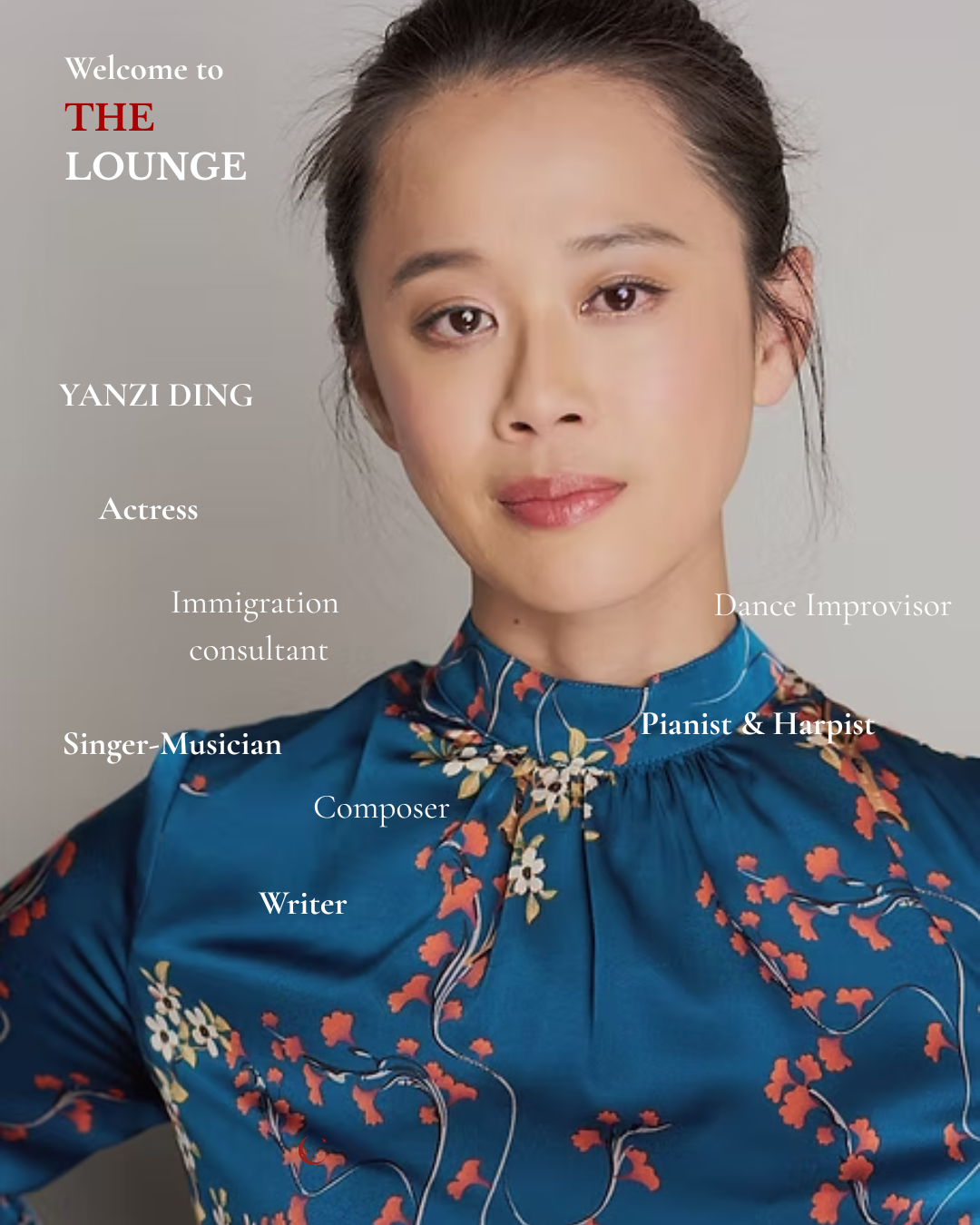
Yanzi Ding is an actor, playwright, harpist, composer, and consultant from Taiwan. She has won the Best Actress award at the World Film Carnival Festival, Los Angeles Cinematography Awards (LACA), Paris International Film Awards, and was a Silver Winner at the Tokyo Film Awards. Her stage play Rushi: Three Reincarnations of a Chinese Woman had its world premiere at a New York East Broadway theater and was invited to the Museum of Chinese in America (MOCA). One of her most recent roles is in a dance theatre called Everyday is A Pig’s Birthday. She always speaks ardently about how to help immigrant artists build a career in the United States.
Article writer: Ariel Xinyu Peng
Interview hosts: Hua Hannah Zhong & Ariel Xinyu Peng
Podcast audio editor: Ariel Xinyu Peng
Visual editor: Hua Hannah Zhong
“I could not speak fluently in life, but I could talk for an hour in an act.” When she first came to America in 2016 to study musical theatre at AMDA, Yanzi Ding could only understand what her teachers said. Most of what she wanted to say was expressed in silence. If we fast forward to the end of this story, we will see Yanzi communicating fluently with her professors, fellow classmates, and everyone else she encounters on and off stage. “The funny thing is that I do learn English through acting,” Yanzi said. Could it be that bilingual and multilingual people are better actors, because they go an extra mile to understand a role in a script, and the content is comprehended in more than one language? While Yanzi was direct when describing her linguistic anxiety from the earlier days, her acting process seeps into her interaction with the world around her.
One word to describe Yanzi is: Kind. When asked “what are you dreaming of now,” Yanzi told us that she dreamt of spending more time with her family in Taiwan and felt sorry that her answer wasn’t “helpful.” I wasn’t surprised to see that she’d want to provide something useful to the immigrants, international students, and all the diasporic people out there through this interview.
What did surprise me was that, when asked about the difficulties that immigrant artists often face nowadays, Yanzi responded that we needed to “assimilate” to American culture and the American life. Aren’t we past the stage of assimilation? Seeing my confusion, she explained that we must learn to identify the problems on this land, since learning to fix the issues of this land has become a part of our work too.
Aside from all her prominent works, there was one script that didn’t live to see the light of day: “The script was called Sans Everything, its title taken from a monologue from the play As You Like It by Shakespeare: ‘Sans teeth, sans eyes, sans taste, sans everything.’ One day, you’ll lose your smell, lose your eyes, lose everything. I felt very obsessed with this concept…and [when I was sick with Covid] I thought, if I die in this hospital, hmm, that’s all, nothing more about visa, green card, life career… Nothing no more.” I felt a certain darkness from her.
But what if we could do everything? Instead of sans everything, we are with everything. While the lure of a sedate life sounded nice, Yanzi kept saying to us that we only have 24 hours a day and that she couldn’t do everything all at once. “There’re few people who’ve figured out what they want to do in life,” she said. The feeling that there’s nothing I’d rather do is unbeatable. When under pressure, we feel that everything is too much, but when we start the actual work, we don’t have enough time. So which one is true? Is the pressure an illusion? We could do more creative work when we are free of the burdens in life, and the immigrant life has a few particular types of burdens. When the immigrant life has merged into your personality, you might get some stories out of it, or maybe you won’t let that define your stories. The important thing is to always remember who you are. You are on a visa or some other kinds of borrowed terms, but you are you, and it shows in your work. Like Yanzi said, “You have to take chances in life. If you don’t, life won’t happen.”
As we reached the end of the interview, rush hour started to emerge in K-town, outside the windows of Yanzi’s office. With the car horns and indistinguishable chants—the music of NYC, the interview came to a halt. I joked, as I’d always do when our interview would be interrupted by traffic sounds, that it was proof that we lived in New York City. Yanzi, again to my surprise, didn’t even let out a chuckle. I anticipated her to laugh at least a little, to confirm my knowledge that joking about it when interrupted by traffic noises is proof of living in New York. Perhaps her being unfazed was more her style.
The conversation has been edited for clarity and flow.
Trigger warning: sexual assault
Acting & Writing
Ariel Xinyu Peng (AP): Did you study acting in college?
Yanzi Ding (YD): No, I actually did my undergraduate degree in Taiwan as a harpist. I came to AMDA in 2016 to study musical theatre, for a two-year conservatory program.
Hua Hannah Zhong (HZ): How does music shape your acting?
YD: Musicians have very strong disciplines. We would rehearse a thousand times to get the right feeling or essence of the music, even when we think we can already breathe that score, we’re still looking for anything that we can do differently.
I was first inspired by my harp teacher back in Taiwan. She was a writer, performer, and producer. I realized from her that I didn’t want to only play in an orchestra for my whole life, so I started to collaborate with filmmakers and theater directors to play harp or piano in their plays or musicals.
HZ: Your stage play Rushi: Three Reincarnations of a Chinese Woman, 如許:一個中國女人的三生三世, had its world premiere in 2019 at the Playroom Theatre, now named New York East Broadway Theater, and was featured in the press of the Museum of Chinese in America (MOCA). Can you talk a bit about this play and where you usually find inspirations?
YD: This is a play about three reincarnations of a Chinese immigrant woman. It turned out to be a one woman show, due to the budget.😂
I simply observe people. The Chinese woman in Rushi was based on my masseuse! Her shop was right across from the MOCA, so I would chat with her and ask about her life, why she’d come to America, etc. She said she did everything for her son and told me about the unimaginable things she’d encountered at work, such as when men would come to her shop and say that they wanted sexual services. She often had to deal with those kinds of dangerous situations alone.
A lot of these immigrant women are probably in the process of waiting for a green card or citizenship. They have to silence themselves for a lot of things. So do a lot of international students, who have to endure a lot as well.
HZ: Do the real stories you collect affect your acting?
YD: There was a time when I believed that every character and story had to be based on a true story. Even though my script was fiction, I believed that there was someone out there for the writer, as an inspiration, and I had to find that person, or any other types of resources, or any clue. For instance, I learned how to do a foot massage from my masseuse, and during every performance, I would pick one person from the audience to be my customer and actually give them a foot massage on stage.
HZ: What has been the most memorable writing process?
YD: There was a script for a short film about a girl who deals with death because of COVID. It was based on my experience when I had gotten the first round of COVID in 2020 in New York, and later I flew back to Taiwan and was quarantined in the hospital. The script was called Sans Everything, its title taken from a monologue from the play As You Like It by Shakespeare. The monologue’s last line says, “Sans teeth, sans eyes, sans taste, sans everything.” One day, you’ll lose your smell, lose your eyes, lose everything. I felt very obsessed with this concept, and in the hospital I had a deep conversation with myself and thought, if I die in this hospital, hmm, that’s all, nothing more about visa, green card, life career… Nothing no more.
At first, I only wrote the script to recall the experience. Afterwards, I showed it to a director and was suggested that I submit it to a few festivals to get funds, but I heard nothing back. It was very tough during COVID time, so eventually we couldn’t produce it. The script is still sleeping in my drawer.
AP: You got a script out of it, and, even though it’s sleeping in your drawer, it’s still something you created. A lot of people can probably relate to the experience, being in the darkness of your mind and having deep conversations with yourself, no matter the outcome. However, it stood out to me that the first thing you thought of, in that conversation with yourself, was that you didn’t have to think about your visa anymore. This visa anxiety and the need to constantly keep up with your status must have been exhausting, to say the least.
YD: When you are in that kind of situation, your whole mind is visa. You cannot see anything else. So when life-and-death things happen, that’s your chance to realize that life does not have only one path. You have to live here.
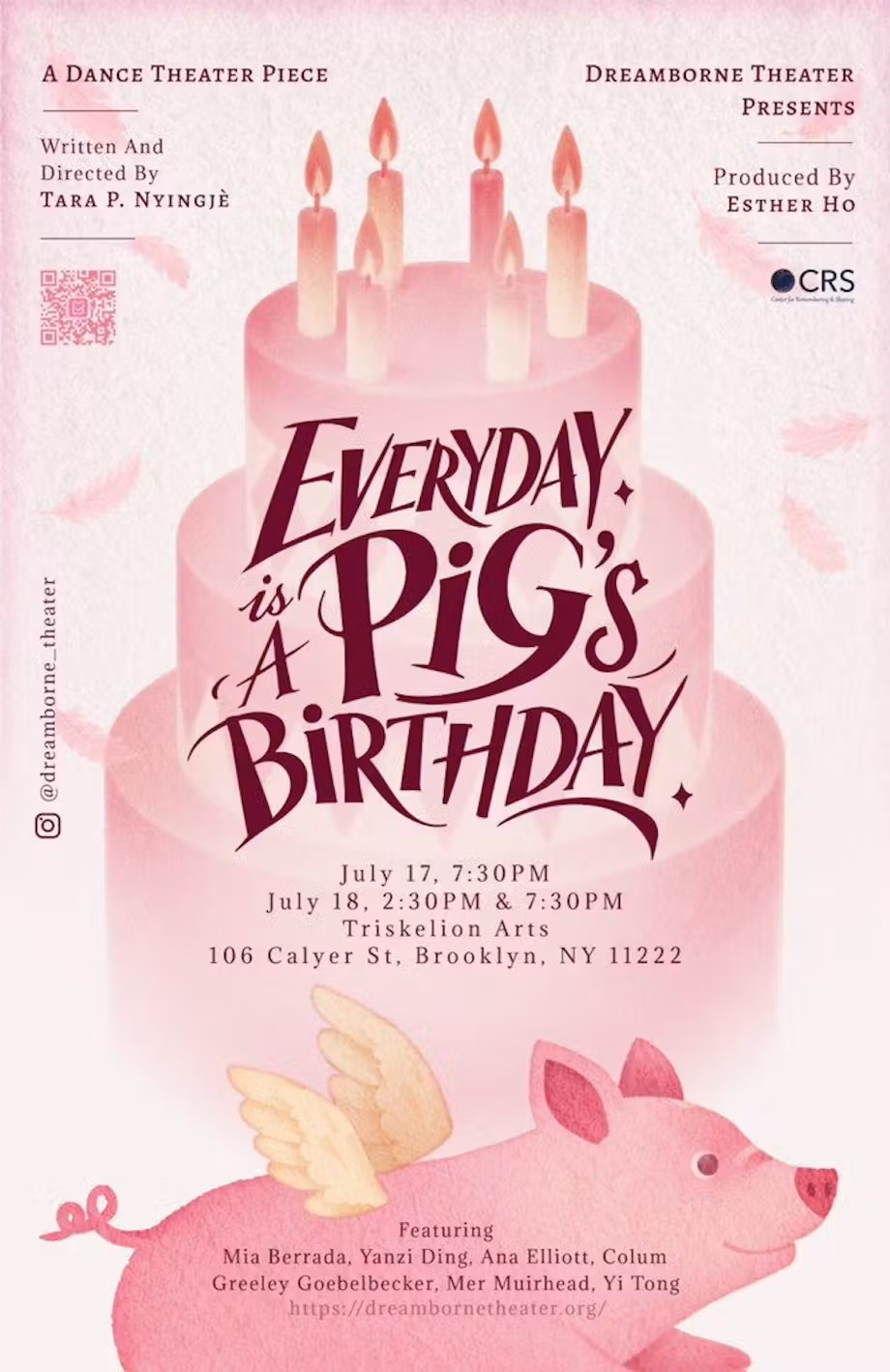
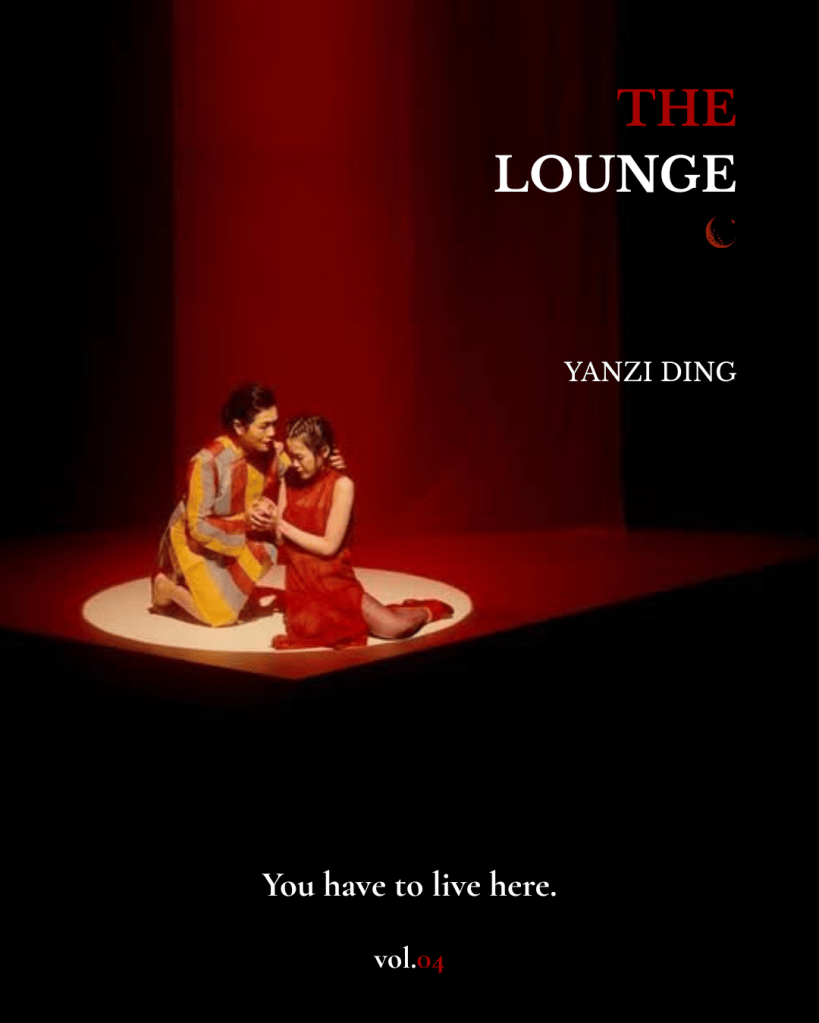
HZ: Could you tell us about the play you acted in this July, EveryDay Is a Pig’s Birthday?
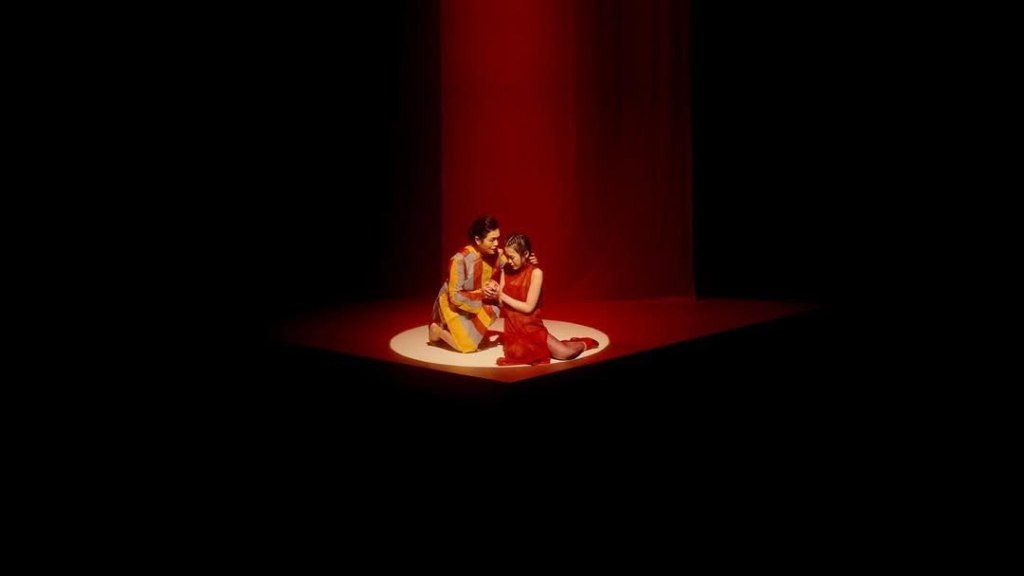
YD: This was a dance theater with minimum dialogue. I was attracted to the production by its idea about pigs in factory farms: Since they could be brought out to the slaughterhouse any day and time, every day for them is a birthday because for every day that they are not dead, they are alive again. The concept of this play also aligns with my lifestyle, though they weren’t discussing anything about animal rights. It was just about how people think differently about birthdays.
Acting in Different Languages
HZ: How is acting in theatre different from acting in front of cameras?
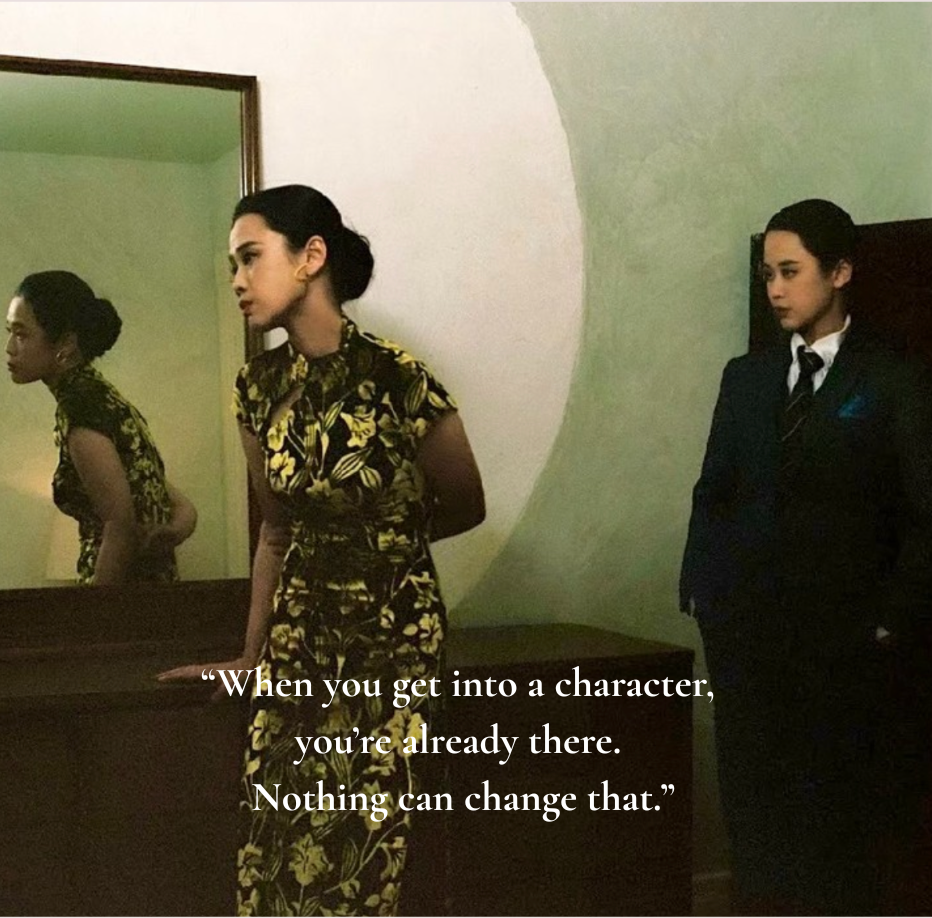
YD: I have been thinking about this question for a long time as well. I’ve been trying to find out how I should approach them differently. However, for me, they are almost the same, because when you get into a character, you’re already there. Nothing can change that.
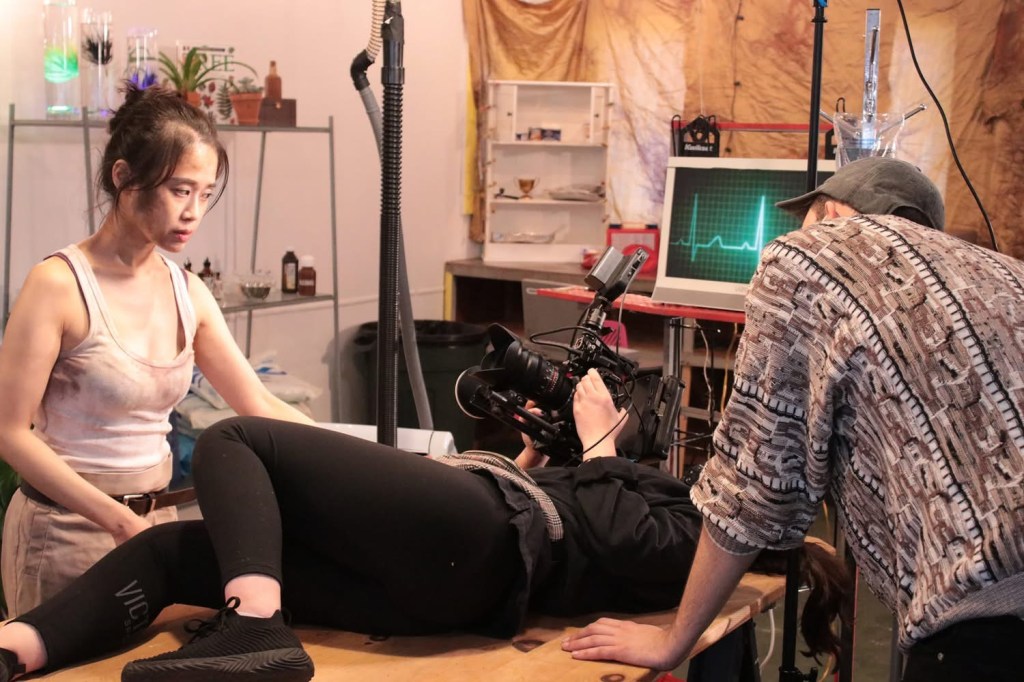
For films, you have the chance to do it again and again and again, and sometimes emotions will drain out. I’m always trying to figure out how I can sustain my emotions and their different levels of intensity and give the same dynamic every time. While in theater, you have only one chance. You have to monitor a lot of things, such as the audience’s reaction. Sometimes the cue is not there, other times you have to improvise when your partner forgets the line.
The two are both very fascinating to me because I truly get to live in the moment. Especially in theater, you live in the real timeline which cannot be reversed. On the other hand, in a film you can immerse yourself in that character while being in a real room, with a real setting and real props. You only hope that you can do it in one take.
HZ: What is the most relatable role you’ve been in?
YD: Asian actors very often get immigrant roles, and I’ve been many of them, immigrant mothers or very small roles, and in lots of student productions too… But I wasn’t thinking of these roles for them being the most relatable or memorable; I’ve just been in a lot of these types of roles.*
*This answer was partly translated from Mandarin.*
HZ: As a bilingual actor, do you feel a difference when working with either language?
YD: Definitely, since English is my second language. Comprehension of a line’s context comes a bit differently. I would do research and ask those who know the language well if I can’t understand a line. The funny thing is that I do learn English through acting. When I was in school, I was barely speaking, because I could only understand what the teachers said. I almost became mute when I had something to say, and everybody knew it was a disaster to collaborate with Yanzi. However, I could learn from reading the script.
HZ: What was the biggest challenge when you first moved here?
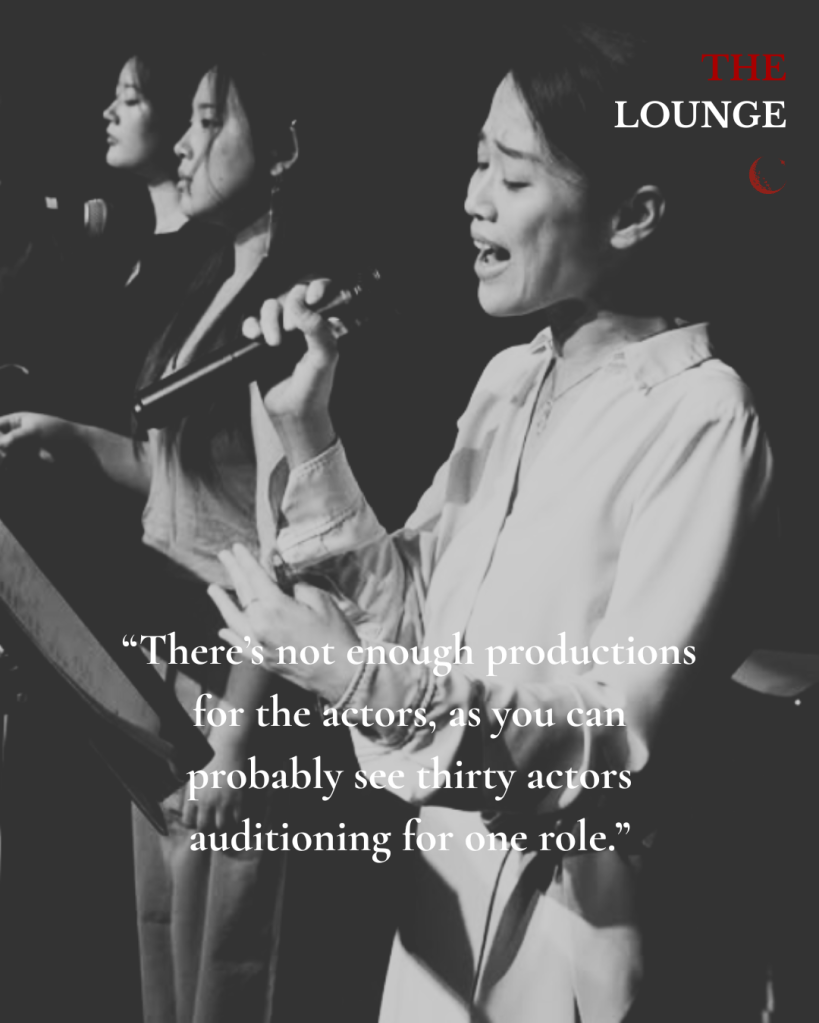
YD: Before you get a visa or green card, of course, everything is challenging. You need to get a job, you need to build your credit, get exposure… Whatever you can get, you will do it; you never think about whether this role is good or not or that they even pay. You have to keep building your credits and keep networking. Furthermore, the challenge for all actors now, with or without visa, is about balance: there’s not enough productions for the actors, as you can probably see thirty actors auditioning for one role.
AP: What was your first ever art-related job after you moved to the US?
YD: It was with a theater group called A Sketch of New York. They have been doing this production for ten years. It’s no pay, but they give a lot of emerging actors a chance to act.
AP: But what was your first art-related paying job?
YD: It was an off-Broadway show called Flying Tigers Fly Away, about how 飞虎队, the Flying Tigers, helped China fight against the Japanese during the war. I am really grateful for that experience because I learned a lot, such as how to sign a contract, maintain connections, solve problems, and build boundaries with other actors. Since I was still an international student, I was very scared that I’d make trouble. This play is also one of the best memories in my acting life. This experience was a true surprise because I was on my OPT then, so I didn’t have any acting experiences. However, I got to study the history and the character, as the play was based on a true story, and it was such an honor to introduce the story to the local American audience.
AP: What is one advice you would give your younger self when she was just starting in the art world?
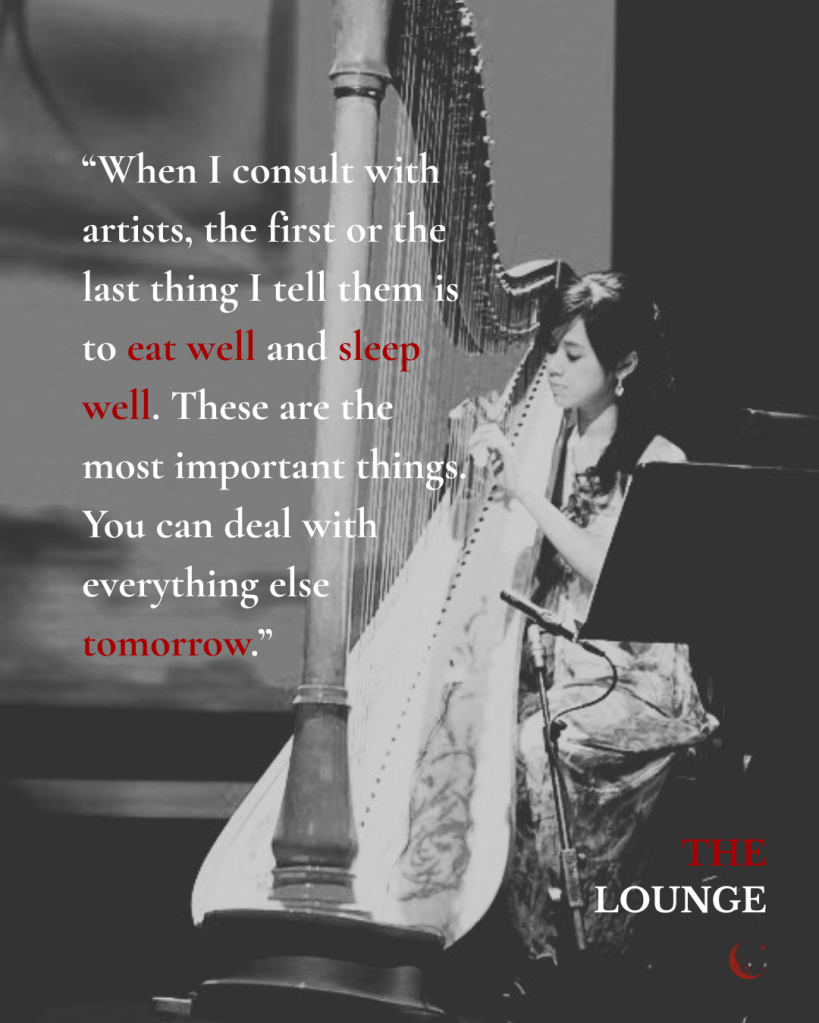
YD: You have to frequently check in with your physical and mental health. I know there’s a lot of burden, a lot to worry about, but try to focus on yourself first, such as getting a good sleep, a good diet, and exercising. When I consult with artists, the first or the last thing I tell them is to eat well and sleep well. These are the most important things. You can deal with everything else tomorrow. When you are calm and stable, everything will be fine because your energy is fine.
HZ: What are some of the difficulties that immigrant artists often face nowadays?
YD: As an immigrant artist, if you really want to make art on this land, you have to assimilate a little, because this country has so many issues and chaos, and the art industry has a lot of problems that need fixing as well. A lot of things don’t exist either, such as fairness.
Immigrants have the quality of knowing how to be flexible in order to cope with various situations. When the world is not mature, you cannot only stay within your own circle. You need to learn how to collaborate and show your work.
AP: What are you currently working on?
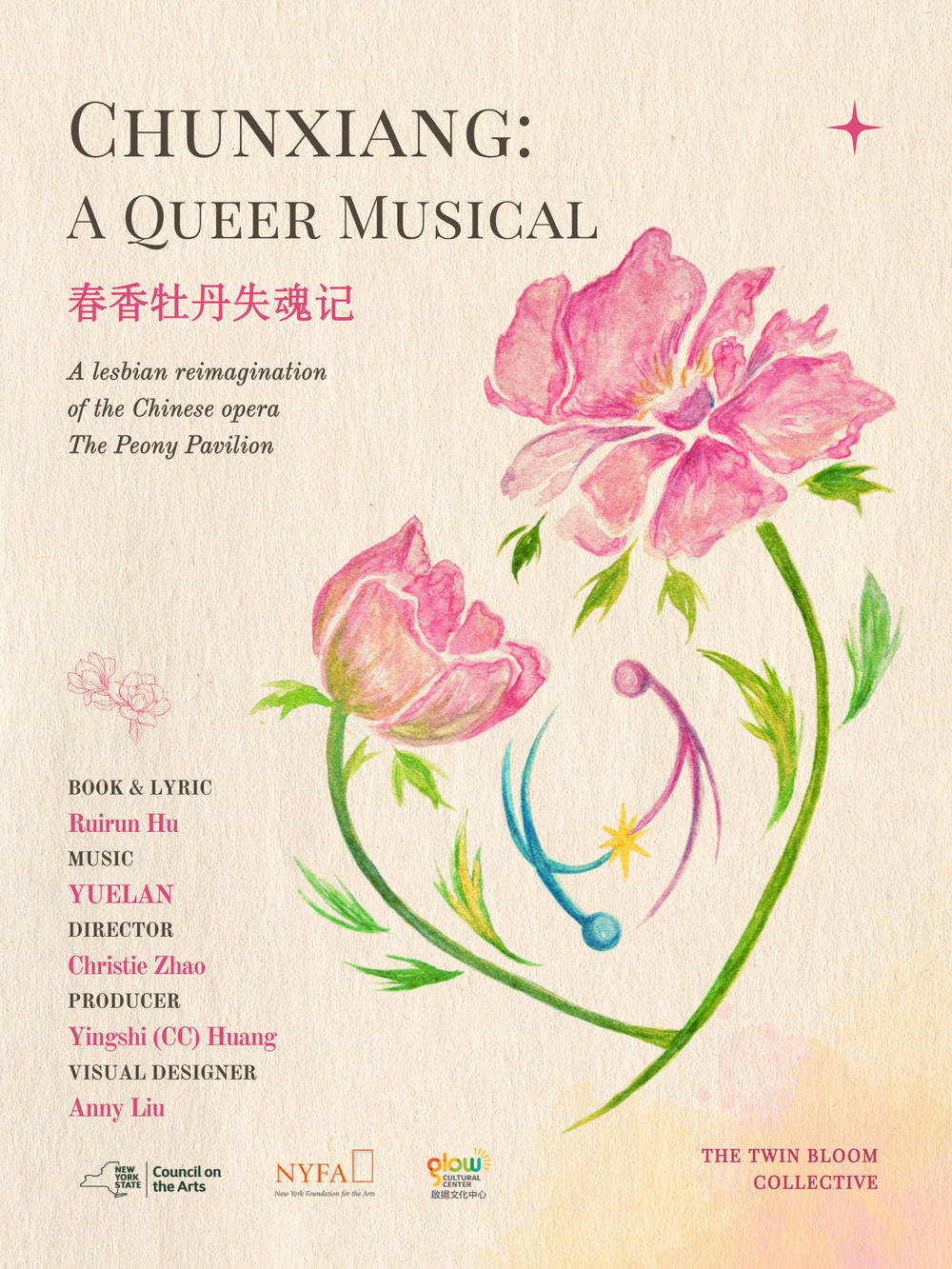
YD: I’m working on a musical called Chunxiang: a queer musical, is a queer adaptation of 游园惊梦, from 牡丹亭 (The Peony Pavilion). The writers adapted the original story of 杜麗娘 (Du Liniang) and 春香 (Chun Xiang), a young woman and her maid, to a queer relationship, where they eventually become a couple. It was particularly challenging since everybody already has a fixed impression for Du Liniang and Chun Xiang. However, it’s only a workshop at this time, and we will sing all the songs for Act I.
A Sense of Belonging
AP: What are some things that offer a sense of belonging? Be it a place, an object, an approval of visa, or something else on paper. What are some of the indicators that say that you do belong here?
YD: That I can speak English freely in the production is one. Like I said, at the school I didn’t speak much, and people avoided me during rehearsals, although eventually they knew what I wanted to say. One day I was discussing the character with the director in English, and I thought, I’m working here! I know, it sounds stupid, but I have that spark moment.
HZ: What are you dreaming of now?
YD: My dream right now is to make more time to go back to Taiwan and be with my family… sorry if this answer isn’t helpful.
AP: If you didn’t have to worry about your visa status back then, what job would you have done?
YD: Still something related to the arts. And if I didn’t have to worry about money, I’d keep acting and composing.
AP: So you do want to go back to composing?
YD: Not right now, but if there is any collaboration happening I will go for it! I have wanted to pick up harp recently.
HZ: We know you lead a plant-based lifestyle. Could you tell us about this decision?
YD: I didn’t become vegan until later in life. When I was young, I was a very big meat eater. Although I have a religious family, they said it was my freedom to eat whatever I had wanted outside the house. Later I learned about karma and reincarnation and knew that I could choose not to harm animals, but that was merely a concept about the cause and the consequence, so it didn’t affect me. I watched a documentary about factory farms, and I still ate meat, because it was a long-term habit. Until one day, I adopted a cat. I loved him so much and wanted to keep all the harm from him. But how come I couldn’t love the other earthlings like that? At one point, my mentality couldn’t get through anymore, and that was when I decided to become a vegetarian. A few years later I became vegan. I think my whole life is pursuing how I can identify and take care of myself in a way that best suits myself. This is not about health, or the environment, it’s not even about saving animals. It’s solely about what makes me feel at peace, and a plant-based life is exactly that.
HZ: Good vegan spots in the city?
YD: Beyond Sushi, Spicy Moon, and Peace food Cafe!

